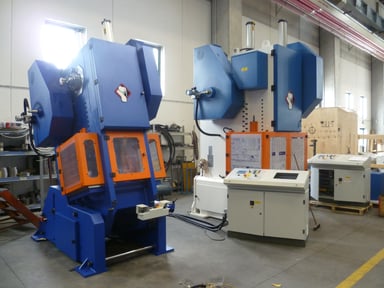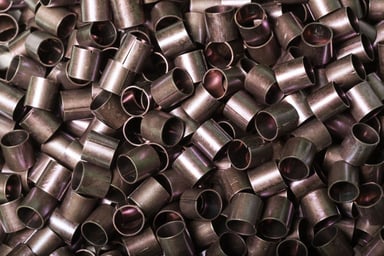
Servo Mechanical Press
There comes a point where a traditional press starts limiting what you can achieve. When part geometry gets more complex or material behavior becomes less predictable, fixed motion simply is not enough. A servo press gives you control over how the slide moves through the entire stroke, which changes how you approach forming, blanking, and deep drawing.
At Sangiacomo Presses Americas, we build servo press systems for manufacturers who want more flexibility without sacrificing production output. You can slow the slide near contact, add dwell where it benefits the material, or run faster through non-working portions of the stroke. That level of control can improve part consistency and help extend die life under demanding conditions.
If you're exploring servo technology for your next capital investment, we're ready to walk through the details with you.
Optimized Performance for Complex Stamping Applications
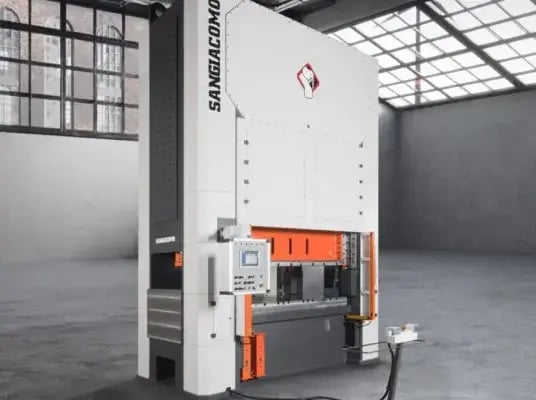
A servo press applies force exactly when and where your process needs it. Sangiacomo designs each servo press machine to give manufacturers tighter control over forming energy, especially in applications where material flow, draw depth, or fine blanking tolerances leave little margin for error. Instead of adapting your tooling to the press, you can tune the press to the job.
Each system can be configured with:
- Programmable motion profiles
- Adjustable dwell at bottom dead center
- Energy-efficient drive systems
- Precision slide guidance
Because the motor drives the slide directly, a servo mechanical press can deliver usable tonnage across a broader portion of the stroke. That opens the door to cleaner forming, reduced shock to the frame, and better consistency from first part to last.
Chosen by Manufacturers for Flexibility and Efficiency
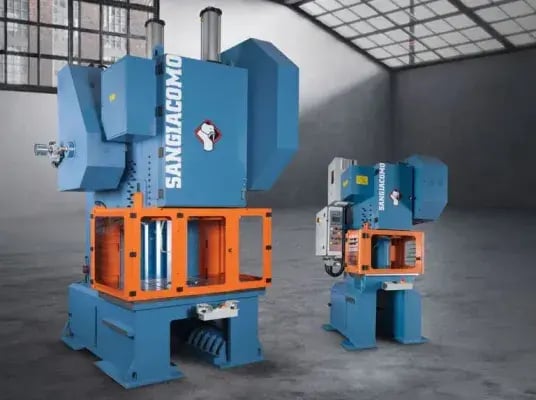
Manufacturers choose a servo stamping press because it delivers greater control, efficiency, and flexibility. The ability to customize slide motion to match material and die requirements improves part quality, reduces scrap, and minimizes tool wear.
Programmable stroke profiles make it easy to accommodate a wide range of jobs on the same press. Whether you're working with complex forming processes or thinner materials, motion settings can be adjusted without changing hardware—providing the versatility manufacturers need to adapt to shifting production demands over time.
Additionally, reduced shock to the press frame helps minimize structural fatigue and extend die life, enabling more predictable maintenance and keeping your operation running smoothly.
A Solution for Modern Production Floors
At Sangiacomo, we understand that choosing the right servo press manufacturer means looking beyond the drive system. Our presses are engineered and built in Italy at an ISO-certified facility, ensuring long-term reliability and precision. In the U.S., our Huntsville, Alabama team provides ongoing service and support, giving you peace of mind well after installation.
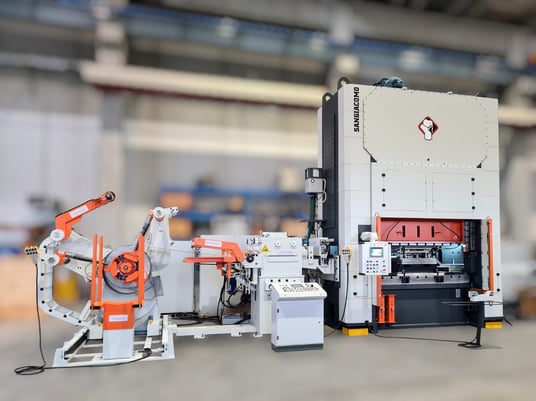
Our solutions include standalone servo presses or fully automated stamping systems equipped with coil handling, transfer devices, and robotics. Each system is designed to meet your production goals with custom capacities, bed dimensions, and stroke configurations specific to your requirements.
Tailored to Your Application and Output Goals
Every stamping operation has its own mix of material types, tooling strategies, and throughput targets. A servo press machine gives you the flexibility to adapt to those variables without redesigning your entire line. From draw work to high-speed progressive applications, motion profiles can be developed around your specific process requirements.
We collaborate directly with your engineering and production teams to define tonnage, stroke length, shut height, and automation readiness before the press is built. The result is a machine that fits your workflow and supports long-term production stability.
Frequently Asked Questions About Our Servo Press Systems
How does a servo press compare to a traditional mechanical press in terms of energy consumption?
A servo press typically consumes very little energy when the ram is not in motion. This can lower overall power usage, especially in applications with intermittent production cycles.
Can servo presses handle high-tonnage applications?
Yes. Modern servo systems deliver full-rated tonnage where required in the stroke. For many applications, the ability to apply controlled force over a longer portion of the stroke improves forming performance compared to conventional flywheel-driven presses.
Is a servo press suitable for high-volume automotive production?
Servo presses are widely used in automotive and other high-output industries because they allow manufacturers to fine-tune slide motion for different parts without mechanical reconfiguration. This makes them a good fit for facilities that run multiple programs or require frequent die changes.
What does maintenance look like on a servo-driven system?
Maintenance requirements differ from traditional mechanical presses because there's no constantly spinning flywheel system. Routine inspections still apply to guidance systems, lubrication, and structural components, but many operations find reduced mechanical wear due to smoother motion control.
Let's Talk About Your Servo Press Needs
If you're evaluating a servo press for your facility, the right decision starts with understanding your application, tooling, and production targets. Sangiacomo Presses Americas works directly with large manufacturing teams to define the best servo press configuration for long-term performance. Reach out to our team to discuss your requirements and explore how a Sangiacomo servo solution can support your next phase of growth.
Get a Quote-1.png?width=384&height=256&name=Untitled%20design%20(2)-1.png)